
I had wanted to see the gardens of Japan for many years.
I was lent some books on the subject, and made lists of the gardens I wanted to visit. The photographs were so exquisite.
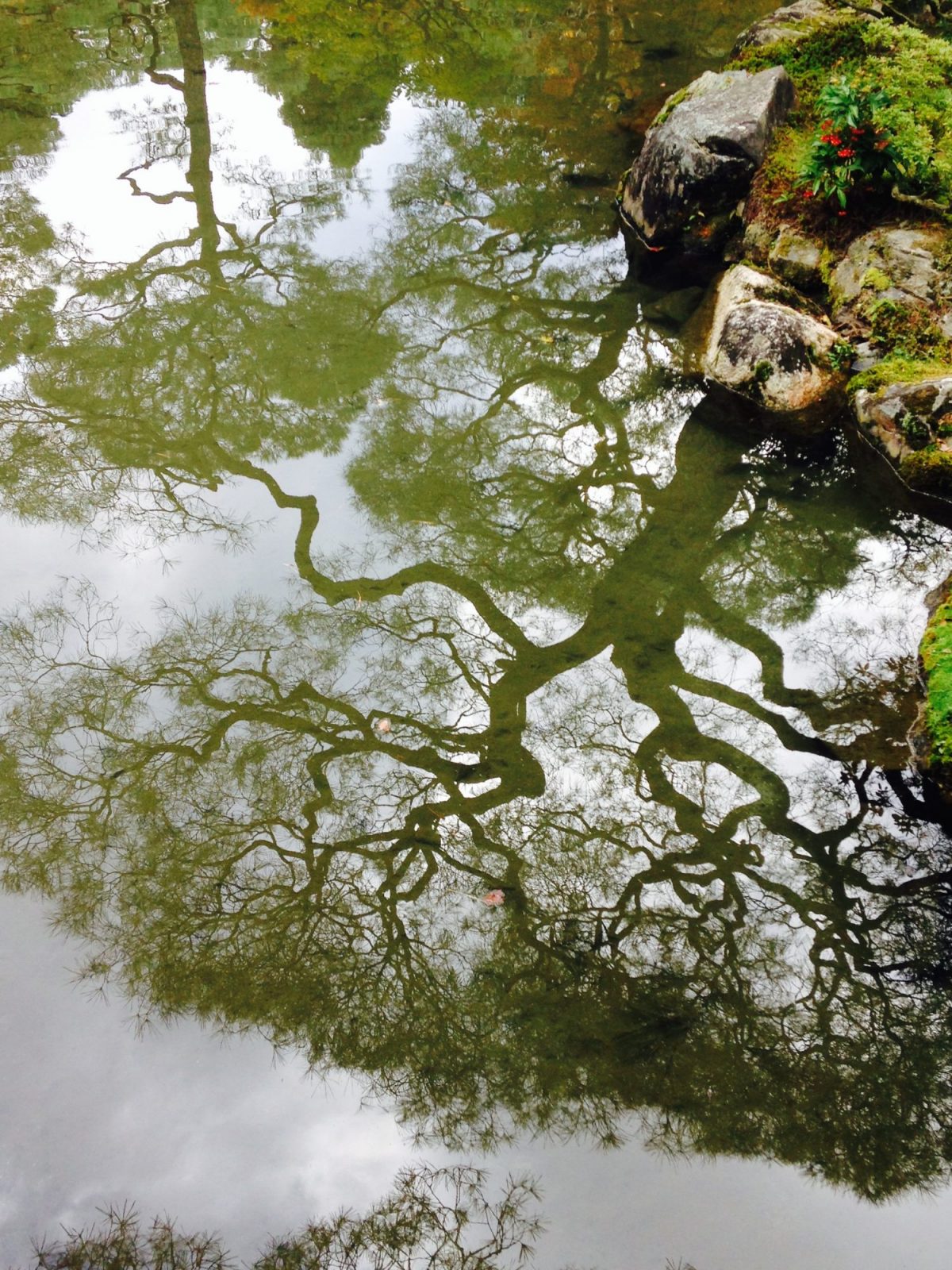
I realise now that these photographs were mainly details, rather than generalised views.
Having now been to Japan, I believe that the Japanese garden is essentially one of individual experience. Designed to be absorbed either through a meditative view on a single scene from a single viewpoint or experienced sequentially on moving through the space – each detail taken as a single moment.
Another, now obvious, facet of the Japanese Garden is its integral relationship with Buddhism and the monastic life. Of the gardens I visited in Kyoto almost none were purely secular. This is in complete contrast to the vast majority of historic gardens in the Western world. So, of course, the experience is quite different.
As with any other art form, a garden, like music or poetry, can profoundly affect your state of mind and in Japan that is exactly what was intended.
In the barest ‘ Kare-sansui’ gardens of rock and sand there is a calm that one rarely encounters elsewhere.
The rocks, the moss and the carefully raked sand are in eternal harmony.
It is impossible not to be touched by it